
When They Pull Away: What Actually Works With Teenagers Who've Shut Down
Mar 22, 2026
There is a particular kind of panic that sets in when a young person you love starts pulling away.
You know the signs. The monosyllables where there used to be conversation. The bedroom door that's always closed now. The eye contact that stops. The sense that something is happening inside them that they are actively not sharing with you — and the more you reach for it, the further it retreats.
Most caring adults, at this point, do one of two things.
They push harder. More questions, more check-ins, more explicit bids for connection that the young person experiences as pressure and responds to accordingly.
Or they back off completely — hurt, or uncertain, or not wanting to make it worse — and the young person experiences that as abandonment and also responds to accordingly.
Neither works. And if you've lived either side of this, you already know that.
What's actually going on.
Adolescence is, neurologically and developmentally, a process of individuation. The young person's task — the literal developmental job they are doing — is to build a self that is separate from the adults who raised them. This requires some degree of distance. It is not dysfunction. It is not rejection. It is biology completing an assignment.
But it coincides, often, with the period in which young people most need adult support — because the risks are real, the decisions matter, and the part of the brain that handles long-term consequence assessment isn't finished developing until the mid-twenties.
So you have a young person who needs you, who cannot tell you they need you, who may not consciously know they need you — pulling away from the relationship that is actually keeping them safe.
And you have a caring adult who loves them, reads the withdrawal as rejection, and ramps up the pursuit — which confirms the young person's fear that closeness requires exposure, and so they pull further back.
This is not a parenting failure. It is a very predictable dynamic. Understanding it doesn't make it less painful, but it does make it navigable.
The move that works is the one that feels wrong.
Stop making connection the explicit goal.
Not because connection doesn't matter. Because when a withdrawing young person can feel that your goal is to get them to open up, the opening up becomes impossible. The agenda is the obstacle.
What works instead is presence without demand. Being in the vicinity. Doing something alongside them — not with them in the effortful, intentional sense, but near them. Same room. Parallel activity. No agenda announced, no outcome required.
In practice this looks like: watching the thing they're watching without commenting on it. Driving somewhere in comfortable silence. Being in the kitchen while they move through it. Offering food without conversation attached.
It looks, from the outside, like nothing.
It is not nothing.
What you are communicating — through your body, through your consistency, through the absence of demand — is: I am not going anywhere. You do not have to perform closeness to keep me here. I am not hurt by your distance. I am still here.
That message, delivered repeatedly without words, is what eventually moves them back toward you.
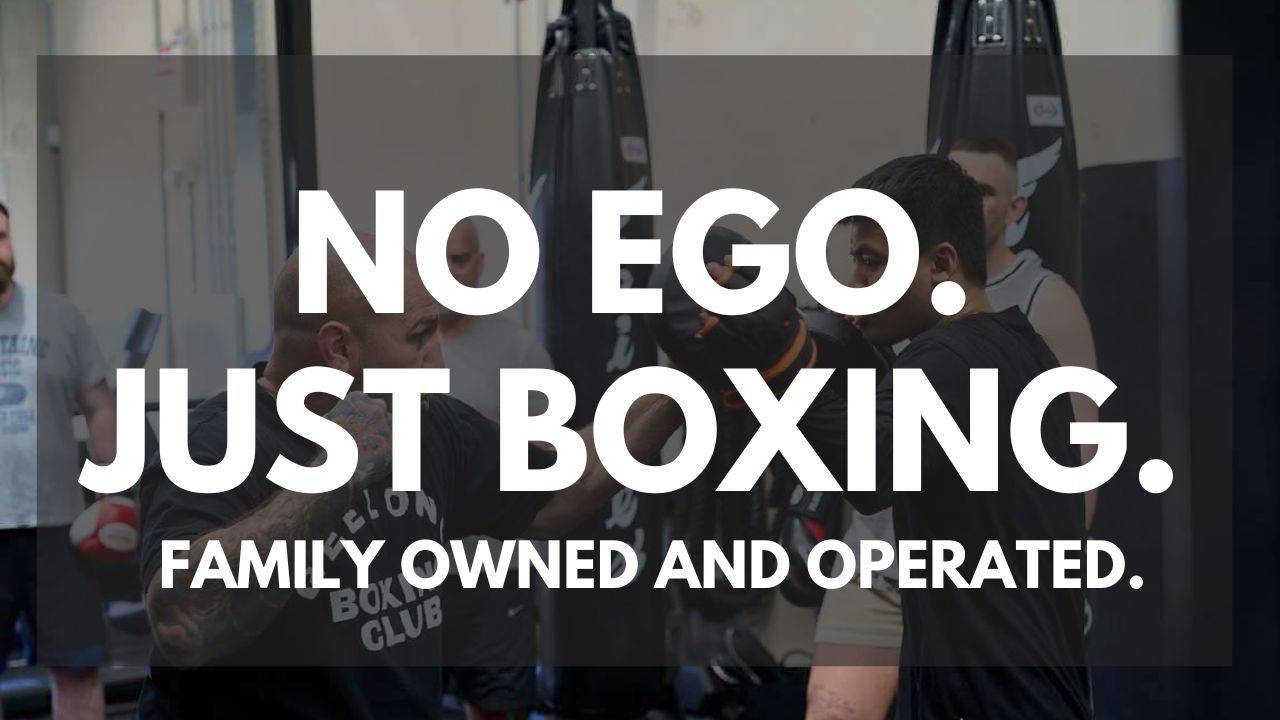
This is exactly why a boxing gym works.
It sounds counterintuitive. But a gym — particularly one designed with young people in mind — is one of the most effective parallel-presence environments you can create for a withdrawing teenager, and it's not complicated to explain why.
There is a task. The task is concrete and physical and has nothing to do with their emotional state. Nobody is watching their face. Nobody is waiting for them to say something meaningful. The conversation that does happen is about feet position and guard and whether they telegraphed that last combination — not about how they're feeling about school or what happened at home.
And yet the relationship is building the whole time.
The coach shows up consistently. The environment is predictable. The young person is being seen — not their history or their background or their risk factors, but their effort, their improvement, the specific way they've started setting their back foot differently over the last three weeks. That is recognition without surveillance. It lands completely differently to every other kind of adult attention they might be used to.
The ones who eventually open up — and they do, in their own time, on their own terms — don't do it because someone asked the right question. They do it because the accumulated weight of turning up to the same place, with the same people, and being received the same way every time has quietly shifted something in their sense of safety.
You cannot manufacture that moment. But you can build the conditions for it.
That is what this gym is built for.
Practical things that help. At home and in the gym.
Side-by-side over face-to-face. Direct eye contact is threatening when someone is guarded. Movement, driving, doing something physical together — these lower the threat level because the conversation becomes incidental rather than the point. Some of the most significant shifts happen in the car, or mid-drill, because nobody has to look at anyone.
Short and complete. Don't leave interactions open-ended as a strategy to keep them talking. "I'll leave you to it" is more regulating than hovering hopefully. Completing an interaction cleanly tells them you're not going to extract more than they offered.
Name what you observe without interpreting it. "You seem quiet today" is neutral and safe. "You seem quiet, is everything okay, did something happen, are you sure, you can tell me anything" is a spiral that will shut them down faster than almost anything else. Observe once. Leave room.
Find the physical thing. It doesn't have to be boxing — though we are obviously not unbiased here. Anything that gives you a shared activity where the activity is the point and the conversation is optional. Cooking. Driving. Shooting hoops. The container matters less than the principle: side-by-side, task-focused, no agenda attached. If you can find something they're already drawn to and put yourself in the vicinity of it, you have most of what you need.
Repair quickly and without drama. When you get it wrong — and you will, because this is genuinely hard — the repair matters more than the rupture. A quick, genuine acknowledgment without extended processing tells them that mistakes don't destabilise the relationship. That is important information for a young person to have about you.
Maintain the ordinary things. The routines, the rituals, the small habits of your shared life. These communicate safety more than any conversation can. When a young person's inner world is chaotic, the predictability of the ordinary is not boring. It is an anchor.
You are not failing because they're pulling away.
You are in one of the hardest parts of loving a young person — the part where your instinct and their need are temporarily pointed in opposite directions, and holding that tension without collapsing into either pursuit or retreat is the whole job.
It doesn't last forever.
Stay close. Stay quiet. Stay.
Come in together.
We work with young people at Geelong Boxing Club because movement builds what talk alone can't — safety, consistency, competence, and the kind of relationship that doesn't require anything to be said out loud before it starts to matter.
We're currently exploring sessions for caregivers and young people to train together. Not therapy. Not a program with clipboards and outcome measures. Just a shared physical experience in a space that already knows how to hold both of you.
If that's something you'd like to know more about, we'd love to hear from you. Get in touch below — no commitment, no form, just a conversation.
About the author
Lena Moxon is an educator, mental health practitioner, and founder of Beyond Boxing in Corio, Geelong. For over a decade she has worked directly with young people, families, and the systems around them — close enough to know what the research says and close enough to know when it doesn't match what's actually happening in the room. She writes Raw Notes on Resilient Teens for caregivers, practitioners, and anyone who suspects the official answer isn't the whole one.
