
Twelve Minutes Matched 150. The Hard Part Isn't the Twelve.
Sep 30, 2026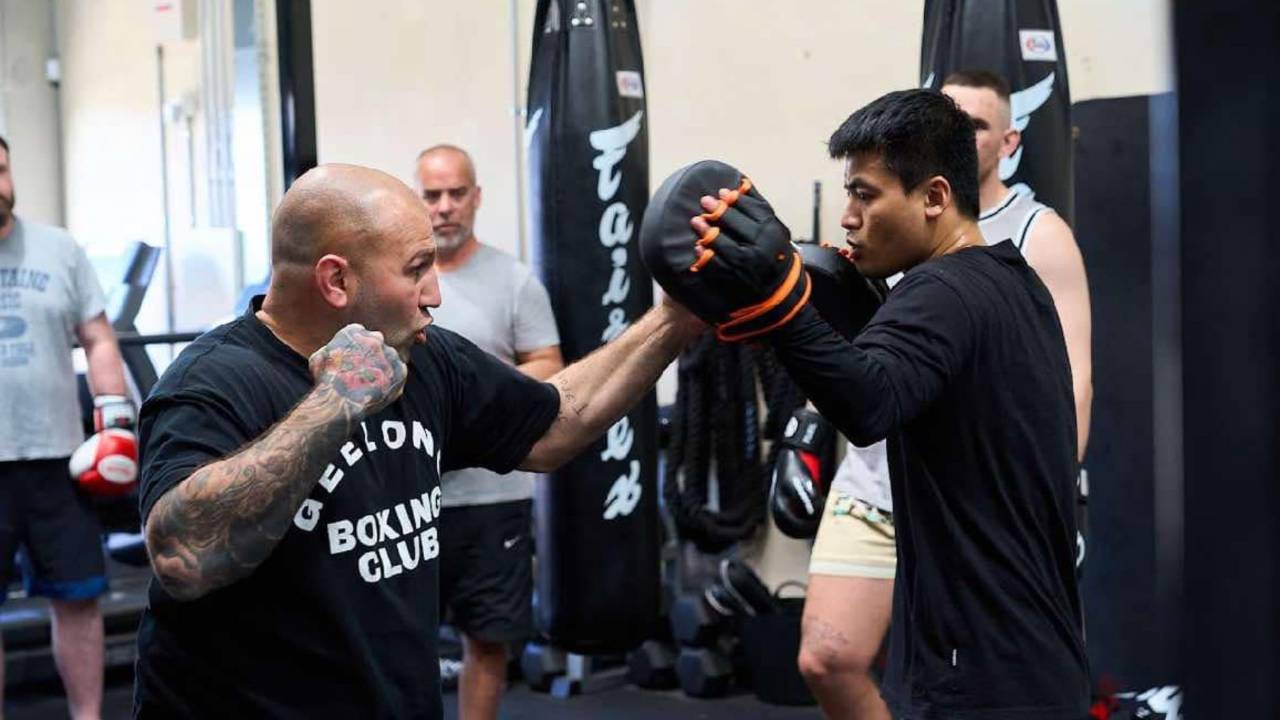
This month researchers pooled wrist-device data from 147,414 adults across the German National Cohort and the UK Biobank and worked out what each intensity of movement is actually worth. One hundred and fifty minutes a week of moderate activity was associated with around 30 per cent lower mortality. Roughly twelve minutes a week of vigorous activity was associated with the same thing.
Twelve. Not twelve a day. Twelve a week.
What the data actually says
The paper is in the International Journal of Behavioral Nutrition and Physical Activity, published 15 September 2026, with a mean follow-up of 7.9 years and 5,545 deaths recorded. Light activity got to the same place eventually, but it took around 510 minutes a week — eight and a half hours of gentle pottering to match a quarter of an hour of hard work. Swapping as little as 15 to 60 minutes a week of light or moderate movement for vigorous movement was associated with a further 18 to 30 per cent reduction in mortality risk.
It isn't an outlier finding. A year earlier a University of Sydney team ran the same question through 73,485 UK Biobank participants and published the equivalences in Nature Communications: one minute of vigorous activity came out worth 4.1 minutes of moderate for all-cause mortality, 7.8 minutes for cardiovascular mortality, and 9.4 minutes for type 2 diabetes. The convention built into the guidelines most of us have been quoting for a decade assumes a ratio of one to two. That number came from asking people to remember, on a questionnaire, how hard they had been trying. Wrist devices don't ask.
The part the coverage will get wrong
The headline writes itself: twelve minutes a week is all you need. Don't take that one home.
These are observational cohorts of adults aged 40 to 74. People who are capable of genuinely vigorous work are, on average, already healthier than people who aren't — some of what looks like a benefit of hard effort is really the body that was already there. And twelve minutes isn't a program. It is the smallest slice at which the signal is still visible, which makes it an interesting statistical fact and a poor training plan.
The finding worth keeping is narrower and more useful. Intensity is not a rounding error on volume. It is doing a large share of the work, and most adults never go near it.
That is the real problem, and it isn't a motivation problem. In 2022 the ABS found that 22.4 per cent of adults aged 18 to 64 met the physical activity guidelines at all, and that 46.9 per cent of employed adults described their working day as mostly sitting. Vigorous has a plain definition: you cannot hold a conversation. Not "this is getting hard". You cannot get a sentence out. A lot of adults have not deliberately been there since a school athletics carnival, and nothing in an ordinary week takes them there by accident. A steady half hour on a treadmill with a phone propped up in front of you will not produce it. Neither will an hour on a gym floor where nobody has ever told you what the session was for.
Where the hard minutes come from
Boxing handles this structurally, which is the only reason it's worth raising here. A round is a fixed block of work followed by a fixed block of rest. Arousal, then recovery, then arousal again — the system gets taken up and brought back down on a timer, instead of drifting along in the middle for forty minutes. Pad work with a coach calling the last fifteen seconds produces genuine intensity from people who would never have chosen it on their own, because the effort is a response to something happening in front of you rather than a decision you have to make by yourself while tired. That is co-regulation doing a very unglamorous job: someone else holds the pacing so you don't have to negotiate with yourself mid-set.
What this looks like on our floor is entirely ordinary. Someone in their forties, six weeks in, finishes a round, puts their hands on their knees and says some version of: I haven't breathed like that since school. They are not unfit. They have simply had no reason to find out, and nobody standing near enough to notice either way.
We have argued here before that intensity isn't the variable that decides whether training wrecks you — that is work load, sleep and whether anyone is paying attention. That still holds. This is a different question with a different answer. For mortality and cardiometabolic risk, intensity is very much the variable. Both are true at once, and the thing that reconciles them is recovery. Hard minutes are safe when they are contained, coached and followed by enough rest. Unsupervised, unstructured and chronically hard is where people get hurt and then quietly stop coming.
One more thing worth saying plainly. Training is not a treatment. If you are managing a diagnosed condition, physical or mental, this sits alongside your care rather than instead of it, and if you have been sedentary for a long time or anything about your heart health is unclear, that is a conversation with your GP before it is a conversation with us.
The short version
You probably don't need more hours. You need some minutes that actually count, in a room where someone can tell whether you got there.
Our adult sessions are built for people with no boxing background at all, and you're welcome to come in and train. Have a look at the timetable at geelongboxingclub.com.au or call us on 03 5277 1858.
