
4.7 Million Teen Accounts Went Dark. Community Sport Didn't Notice.
Oct 12, 2026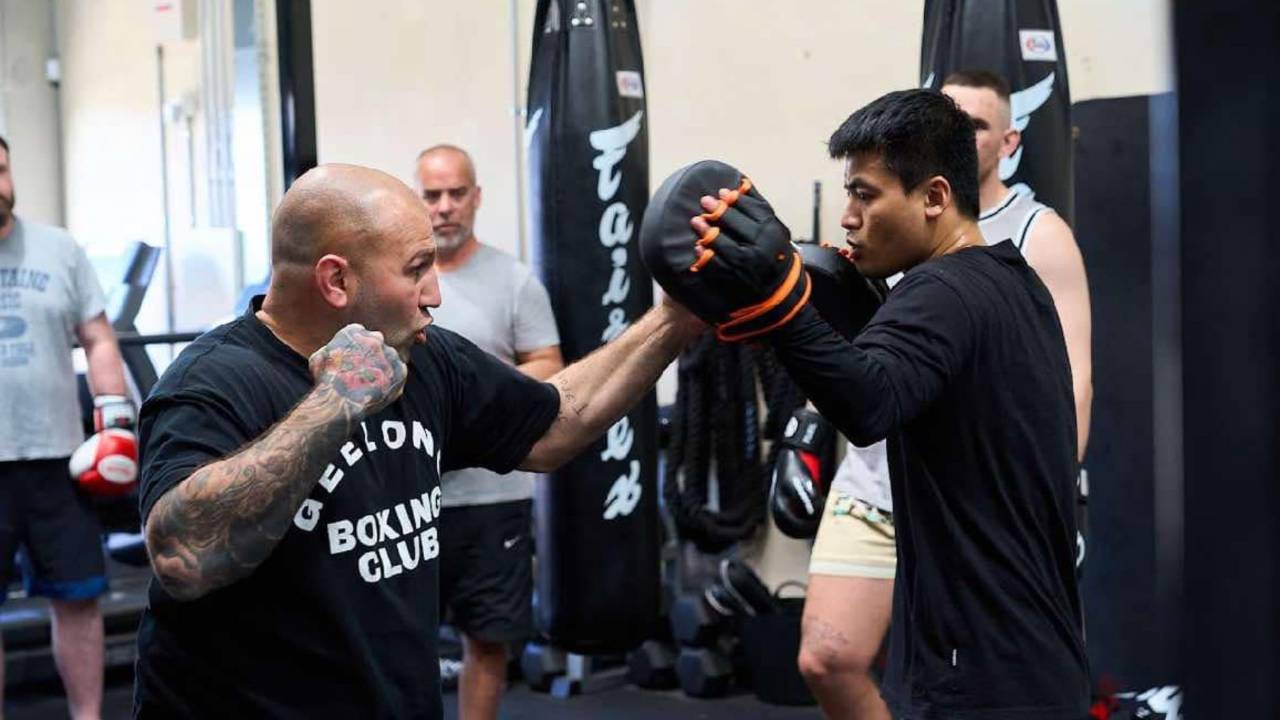
In January the Prime Minister's office announced that more than 4.7 million under-16 social media accounts had been deactivated, removed or restricted within days of Australia's new minimum age law taking effect. Communications Minister Anika Wells said that "every account deactivated could mean one extra young person with more free time to build their community and identity offline."
Six months later eSafety published the first wave of its own evaluation and measured what happened to the free time. The answer is: not that.
What the report found
eSafety's three-month follow-up, released on 31 July 2026 and reported by the ABC, compared more than 4,000 children and families aged 10 to 15 before the law and three months after it. Use of at least one age-restricted platform fell from nearly 86 per cent to just above 81 per cent. Account ownership fell from 52 per cent to 42 per cent. Daily use barely shifted — about 60 per cent before, about 58 per cent after. Roughly half the children who kept their accounts said the platform had simply never checked their age.
Then the finding that should have led the coverage and didn't: minimal change in sport and physical activity. Minimal change in arts and music. Minimal change in time with friends and family, and in attendance at community events. What went up was messaging apps and online gaming. Reddit use rose from 6 per cent to over 9 per cent.
So some hours were freed. They went to a group chat and a console — which is roughly what you would expect, because a group chat and a console are available at seven o'clock on a Tuesday night and most of the things that build community and identity are not.
Free time is not a program
This is the part of the policy conversation that keeps getting skipped. Removing a platform is a subtraction. Community and identity are an addition, and additions need somewhere to happen: a start time, a room, a skill that takes longer than a fortnight to get good at, and an adult who is paid to be there and knows the kid's name.
Those places do not spontaneously appear because a law passed. Most of them run on volunteers, a lot of them carry a cost barrier, and a fair number lost their 14-year-olds years ago for reasons that have nothing to do with phones. We have written before about why teenagers quit organised sport; the short version is that they leave when the environment stops being worth turning up to. A ban doesn't fix that. It just removes one of the alternatives, and not even very effectively.
A policy that creates a vacancy in a teenager's evening without creating anywhere to spend it has done half a job. At three months, the eSafety data is a fairly clean measurement of that half.
The thing that actually dropped was visibility
There is one more finding worth sitting with. Parental awareness of children's social media use went down, not up — most noticeably among girls and 10 to 12 year olds. The report says plainly that reduced parental awareness "could limit opportunities for support or early intervention."
Read that twice. The use largely continued. What shortened was the parental line of sight. Which means the adults who see your teenager regularly, in person, for a sustained block of time, matter more now than they did last year, not less.
What a Monday night actually does
In our teen program the phones stay in bags. Nobody makes a speech about it. For the next fifty-five minutes a 13-to-16-year-old has one job, the job is hard, and the feedback is immediate and completely honest: the pad either makes the right sound or it doesn't.
The program is built on the Positive Youth Development framework, which is a research term for a short list of fairly unglamorous things. Predictability — same structure, same expectations, every week, so a nervous system can stop scanning for what's about to happen. Mastery — a skill that visibly improves across a term, which is where durable, effort-based satisfaction comes from rather than the fast kind. Belonging — a group that notices when you're not there. And co-regulation, which is a clinical way of saying that when a kid comes off the bag furious and swinging wild, a calm adult says "hands down, breathe, again, slower" and does not make it worse.
What that looks like in practice: a 14-year-old who says almost nothing for the first ten minutes of his first four sessions, and who by week six is correcting his own guard before anyone mentions it. That is not a transformation story. It is what happens when the expectations are clear and the relationship is real.
To be clear about the limits: training is not treatment. If a young person is struggling, a boxing session is no substitute for a GP, a psychologist or headspace. What a well-run club can offer is one reliable hour a week, run by adults who will notice when a kid changes and say something about it. That is a genuinely useful thing to have in a week. It is not a mental health service, and anyone telling you otherwise is selling something.
Where that leaves the evening
The law has freed up some hours. Whether anything worthwhile happens in them depends entirely on what already exists in your suburb and whether someone is running it properly.
If you want to find out whether this is a fit for your 13-to-16-year-old, get in touch and we'll organise a one-off casual session so they can train with the group and judge it for themselves. Unit 4, 53 Duoro Street, North Geelong — 03 5277 1858, or geelongboxingclub.com.au.
