
Australia Took the Phones. Nobody Told Teenagers Where to Go.
Aug 25, 2026
Three months after Australia banned social media for under-16s, more than 80 per cent of teenagers were still using it. That figure comes from the eSafety Commissioner's own evaluation, released on 31 July, which surveyed more than 4,000 children and families before the ban started in December 2025 and again three months in.
The circumvention number got the headlines. The number worth reading twice is quieter and sits further down: participation in sport, arts, time with family and friends, and attendance at community events showed minimal change.
The policy had a second half, and nobody wrote it
The case for the ban was never really about screens in isolation. It was about what the screens were displacing. Sleep. Sport. Friendships inside the same postcode. The ordinary boredom that eventually pushes a fourteen-year-old out the front door. Take the phone away, the reasoning went, and the time comes back.
The time came back. It did not go to the footy field.
Jeff Hancock, the Stanford psychologist leading the research panel, said it plainly: "This is not like you wave a wand, and all of a sudden, kids are out on the footy fields." Reddit use rose from 6 per cent to just over 9. Messaging apps and gaming went up. Account ownership fell from 52 per cent to 42, which is a genuine shift, while daily use moved from about 60 per cent to 58, which is not. More than 65 per cent of teenagers surveyed said the ban had made no difference to their mental health.
Then there is the finding that should trouble everyone, including the people who campaigned for the ban. Parental awareness of what teenagers were doing online went down. Not up. When something becomes forbidden it does not stop, it goes quiet. The regulator flagged the consequence: less visibility makes online harm harder to spot, and makes a young person less likely to tell an adult when something has gone wrong.
So the measurable three-month result was not less social media. It was slightly less social media, with less supervision of it.
What the phone is actually delivering
Here is the part that gets skipped, because said out loud it sounds like an excuse for phones. A phone is extremely good at supplying an adolescent with three things their development is actively demanding: somewhere they are included, something they get to decide, and something they are visibly getting better at with feedback fast enough to feel.
Those are not vices. They are relatedness, autonomy and competence, the three psychological needs that self-determination theory has been naming since the 1980s and that the Positive Youth Development framework builds on. The phone simply delivers them faster, cheaper, and with no travel time.
Remove the supply without replacing it and you have not produced a healthier teenager. You have produced a bored one with less oversight. Boredom is not a plan. It is a gap, and something always fills it.
What actually competes
"Get them into sport" is advice, not a mechanism. Here is the mechanism, in four parts.
Predictability. Same night, same room, same coach, same start time. Adolescent nervous systems settle around what they can forecast. A program that reshuffles its timetable every term is asking a fifteen-year-old to spend energy on uncertainty that should be going into skill.
Effort-based reward on a slow curve. A phone delivers dopamine on a variable schedule, which is exactly why it holds attention so well. You will not beat it on speed, so do not try. What a training room offers is the other kind: reward that arrives because of effort, reliably, in proportion to it. Six weeks of a jab that keeps missing, then a week where it lands. That teaches a different expectation, which is that difficulty is survivable and it pays.
Being known. Not "welcoming". Known. Somebody notices when you are not there, and says so when you come back.
An adult who does not escalate. Co-regulation, which is a clinical way of saying a calm adult stood nearby and did not make it worse. When a teenager loses their temper in one of our sessions, nobody is sent home and nobody is corrected in front of the room. The instruction is some version of go and get a drink, come back when you are ready, we will pick up where we left off. It is unremarkable. It is also most of the intervention. What the kid learns is that being dysregulated did not cost them their place.
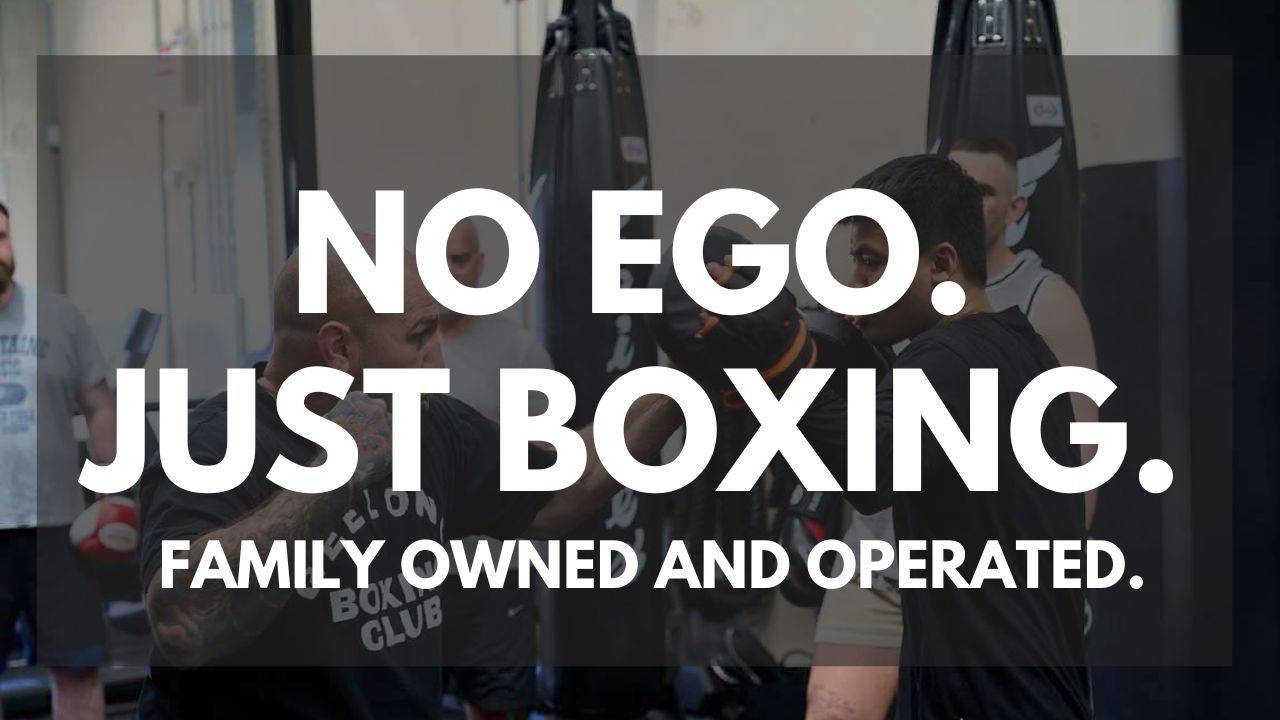
What that looks like on our floor is fairly undramatic. A boy spends his first three weeks standing closest to the door, examining his own hand wraps whenever anyone speaks to him. Somewhere around week six he is holding pads for the newest kid in the room and correcting their guard using the exact words the coach used on him. Nobody announced anything. He simply stopped being new, and being known turned out to be the thing he came for.
The limits, stated plainly
Two boxing sessions a week is not a treatment for anxiety, depression, or anything else that requires clinical care. If a young person is unwell, they need a GP, headspace, a psychologist, the actual thing. Training sits alongside treatment and supports it. It does not replace it, and any program implying otherwise to parents is selling something.
The ban may still prove worth doing. The researchers say we will not really know for a decade, which is an honest answer and not a popular one. In the meantime, the second half of the policy was never going to be written in Canberra. It gets written on a Tuesday afternoon, in a room, by adults who bothered to learn the kid's name.
If you have a 13 to 16 year old and you want to know whether this is a fit, get in touch and we will organise a one-off casual session so they can train in it and decide for themselves. geelongboxingclub.com.au or 03 5277 1858.
